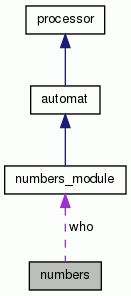
Class numbers implements a wrapper to transparently create and access a numbers_module number recognizer for the appropriate language. More...
#include <numbers.h>
Collaboration diagram for numbers:
Public Member Functions | |
| numbers (const std::wstring &, const std::wstring &, const std::wstring &) | |
| Constructor. | |
| ~numbers () | |
| Destructor. | |
| void | analyze (sentence &) |
| analyze given sentence | |
| void | analyze (std::list< sentence > &) |
| analyze given sentences | |
| sentence | analyze (const sentence &) |
| analyze sentence, return analyzed copy | |
| std::list< sentence > | analyze (const std::list< sentence > &) |
| analyze sentences, return analyzed copy | |
Private Attributes | |
| numbers_module * | who |
| remember which module is doing the real work. | |
Detailed Description
Class numbers implements a wrapper to transparently create and access a numbers_module number recognizer for the appropriate language.
Constructor & Destructor Documentation
| numbers::numbers | ( | const std::wstring & | , |
| const std::wstring & | , | ||
| const std::wstring & | |||
| ) |
Constructor.
Destructor.
Member Function Documentation
| void numbers::analyze | ( | sentence & | ) |
analyze given sentence
Referenced by maco::analyze().
| void numbers::analyze | ( | std::list< sentence > & | ) |
analyze given sentences
| sentence numbers::analyze | ( | const sentence & | ) |
analyze sentence, return analyzed copy
| std::list<sentence> numbers::analyze | ( | const std::list< sentence > & | ) |
analyze sentences, return analyzed copy
Member Data Documentation
numbers_module* numbers::who [private] |
remember which module is doing the real work.
The documentation for this class was generated from the following file:
